Gentle Exercises to Start After Spine Surgery
The road back from spine surgery involves a careful balance that catches many patients off guard. According to the North American Spine Society’s 2024 rehabilitation guidelines, patients who begin appropriate movement within 24-48 hours of surgery show significantly better outcomes than those who remain sedentary for extended periods. Yet the fear of “doing too much too soon” keeps many people immobilized far longer than necessary, actually slowing their recovery.
As surgical techniques become more precise and recovery protocols evolve, the old approach of extended bed rest has given way to evidence-based early mobilization. The challenge facing patients today isn’t whether to move after surgery — it’s understanding which movements help healing and which ones can set back progress by weeks or months.
For the millions of Americans undergoing spine procedures each year, the difference between informed rehabilitation and guesswork often determines not just recovery speed, but long-term functional outcomes. The journey from surgical site to restored mobility follows predictable stages, each with its own opportunities and risks that every patient needs to navigate successfully.
When Can You Start Moving After Spine Surgery?
The timeline for post-surgical movement begins much earlier than most patients expect. Within hours of most spine procedures, nurses will have you sitting up at the bedside — not because they’re eager to discharge you, but because controlled movement prevents dangerous complications like blood clots and pneumonia that can develop during prolonged immobility.
Immediate phase (0-48 hours): Even before leaving the hospital, you’ll be encouraged to perform basic movements. These include gentle ankle pumps, deep breathing exercises, and assisted transfers from bed to chair. The surgical site needs blood flow to heal properly, and complete stillness actually works against this process. Pain medication shouldn’t mask the difference between healing discomfort and harmful strain — your medical team will help you distinguish between the two.
Early mobilization (2-7 days): Once home, the focus shifts to gradual increases in activity tolerance. Walking becomes your primary exercise, starting with short distances around your home and gradually extending to neighborhood blocks. The key isn’t speed or distance — it’s consistency and progression. Your spine is learning to function with its new structural changes, and repetitive, gentle movement helps this adaptation process.
Progressive phase (1-6 weeks): This period varies dramatically based on your specific procedure, but the principle remains constant: movement should challenge your current capacity without triggering significant pain increases. Many patients describe this as finding the “sweet spot” between doing too little and pushing too hard. Your surgical team will provide specific restrictions — typically involving lifting limits, twisting restrictions, and bending precautions — that create the boundaries within which safe exercise occurs.
The most important factor during these early weeks isn’t the specific exercises you perform, but developing an accurate sense of your body’s signals and learning to respond appropriately to both progress and setbacks.
What Gentle Exercises Are Safe Immediately After Surgery?
Range of Motion and Stretching Exercises
Neck and shoulder mobility forms the foundation of early movement, regardless of whether your surgery targeted the cervical, thoracic, or lumbar spine. Simple neck rotations — turning your head gently left and right as if checking traffic — maintain the connection between your upper body and the healing surgical site. Shoulder blade squeezes, where you pull your shoulder blades together and hold for five seconds, counteract the tendency to hunch forward that pain and caution often create.
Lower body flexibility focuses on maintaining hip and knee function while your spine heals. Gentle knee-to-chest stretches, performed while lying on your back, keep your hip flexors from tightening. The key is controlling the movement entirely with your arms — never forcing the stretch or allowing momentum to pull beyond a comfortable range. Many patients find that holding these stretches for 15-30 seconds, repeated several times throughout the day, prevents the stiffness that can develop from modified activity levels.
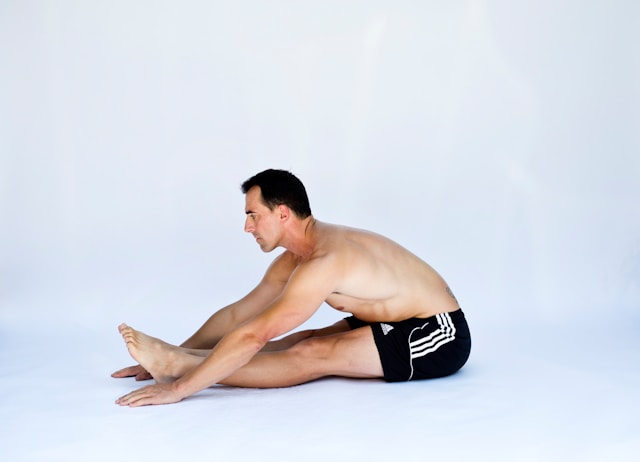
Spinal mobility requires the most caution but remains essential. Gentle pelvic tilts, where you flatten and arch your lower back slightly while lying down, maintain basic spinal movement patterns without stressing the surgical site. These micro-movements — often barely visible to an observer — keep your spine from becoming rigid while respecting the healing process.
Low-Impact Aerobic Activities to Encourage Healing
Walking remains the gold standard for cardiovascular exercise during spine surgery recovery, but the approach requires more strategy than simply “getting your steps in.” Structured walking programs start with time-based goals rather than distance targets. Begin with 5-10 minute walks every few hours, focusing on posture and smooth, even steps. The surface matters — smooth, level ground reduces the risk of unexpected movements that could stress your healing spine.
Stationary cycling becomes appropriate for many patients within 2-4 weeks, depending on their specific procedure and restrictions. The supported seating position reduces spinal load while providing cardiovascular benefits. Start with no resistance and short duration — 5-10 minutes — paying attention to any increase in pain or stiffness during or after the activity. The goal isn’t fitness improvement at this stage, but maintaining cardiovascular health while your spine heals.
Pool exercises offer unique advantages for patients cleared for water activities. The buoyancy reduces gravitational stress on your spine while the water’s resistance provides gentle strengthening. Simple walking in chest-deep water, arm circles, and gentle leg swings can provide both cardiovascular and strength benefits without the impact forces of land-based exercise. However, timing for pool access varies significantly based on incision healing and individual surgeon preferences.
How Do Core Strengthening and Gradual Training Support Recovery?
Core strengthening after spine surgery isn’t about achieving six-pack abs or impressive planks — it’s about rebuilding the muscular foundation that supports your spine’s new structural reality. The deep stabilizing muscles that support your spine often shut down or weaken significantly after surgery, creating a vulnerability that exercise must address systematically.
Deep breathing exercises serve as the entry point to core reactivation. Diaphragmatic breathing, where you breathe deeply into your belly rather than your chest, begins to re-engage your transverse abdominis — the deepest core muscle that wraps around your trunk like a natural back brace. Practice this lying on your back with one hand on your chest and one on your stomach. The stomach hand should rise more than the chest hand, and you should feel a gentle tightening around your midsection.
Progressive abdominal engagement builds from breathing exercises to more active core work. Gentle abdominal contractions, where you tighten your stomach muscles as if preparing for someone to gently push on your belly, can begin within days of surgery. Hold these contractions for 5-10 seconds, working up to longer holds as comfort allows. The key is avoiding any movement that creates back extension or requires lifting your head and shoulders.
Functional strength progression eventually incorporates exercises that mimic daily activities while challenging core stability. Modified planks against a wall, gentle marching in place while maintaining core engagement, and supported squats all bridge the gap between basic exercises and real-world demands. This progression typically begins 4-8 weeks post-surgery, but timing depends heavily on individual healing rates and specific surgical procedures.
The integration of balance challenges — standing on one foot, walking heel-to-toe, or using balance boards — helps restore the automatic core responses that protect your spine during unexpected movements. These proprioceptive exercises teach your nervous system to respond quickly and appropriately to maintain spinal stability during daily activities.
How Can Pain Management and Posture Improve Exercise Recovery?
Pain during exercise recovery isn’t just an uncomfortable side effect — it’s information that directly influences your rehabilitation success. Understanding the difference between healing discomfort and harmful pain shapes every exercise decision you make during recovery.
Productive pain versus warning signals requires careful attention to timing, quality, and response patterns. Mild muscle fatigue or gentle stretching sensations during exercise often indicate appropriate challenge levels. Sharp, shooting, or significantly increased pain suggests you’ve exceeded safe limits. The critical factor is how you feel 2-4 hours after exercise — some mild soreness is normal, but increased stiffness, numbness, or pain levels that don’t return to baseline within a few hours indicate the need to reduce intensity or modify activities.
Posture awareness becomes crucial during the recovery period when pain medication and altered movement patterns can mask poor positioning. Many patients develop protective posturing — hunched shoulders, forward head position, or hip hiking — that initially reduces discomfort but creates secondary problems over time. Regular posture checks throughout the day, focusing on neutral spine alignment and balanced weight distribution, prevent these compensatory patterns from becoming permanent habits.
Breathing integration serves dual purposes during rehabilitation exercises. Proper breathing maintains oxygen flow to healing tissues while helping regulate pain response and muscle tension. The pattern of exhaling during exertion — breathing out while lifting your leg during a stretch or tightening your core during stabilization exercises — provides natural pain management and helps coordinate muscle activation. For individuals dealing with complex recovery situations, including those who need comprehensive support for accident-related injuries, accessing professional guidance through neurosurgery services in Edison can provide the specialized care necessary to navigate both physical rehabilitation and related medical complexities.
Environmental modifications support proper exercise form when pain or stiffness limits normal movement. Using pillows for positioning during stretches, adjusting chair heights for supported exercises, or choosing exercise timing to coincide with optimal pain medication effectiveness all influence exercise success. The goal isn’t to eliminate all discomfort, but to create conditions where therapeutic movement can occur safely and effectively.
Heat and cold applications, when used strategically around exercise sessions, can enhance both comfort and effectiveness. Gentle heat before stretching exercises can improve tissue flexibility, while ice application after strengthening exercises can manage post-exercise inflammation without interfering with the healing process.
Which Exercises Should You Avoid During Spine Surgery Recovery?
Understanding prohibited movements is just as important as knowing which exercises to perform, because certain activities can undo weeks of healing progress in a single moment. The restrictions aren’t arbitrary — they’re based on the biomechanical reality of how force travels through your spine and where surgical sites are most vulnerable during the healing process.
High-impact activities top the avoidance list for obvious reasons. Running, jumping, or any exercise that creates jarring forces through your spine can disrupt healing tissues and potentially damage surgical hardware. But the definition of “high-impact” extends beyond obvious activities — even aggressive walking on uneven surfaces or enthusiastic dancing can create unexpected loading patterns that stress vulnerable areas.
Spinal rotation and combination movements pose particular risks because they create complex force patterns that healing tissues can’t handle effectively. Golf swings, tennis serves, heavy lifting with twisting — these activities combine multiple movement planes in ways that can overwhelm surgical sites. Even seemingly innocent activities like aggressive vacuuming or reaching across your body to lift objects can create problematic rotation forces.
Forward bending restrictions vary based on surgical approach and location, but most spine procedures involve limitations on how much you can bend forward, particularly when combined with lifting. The restriction isn’t just about the degree of bending — it’s about the load on your spine when bent forward. Picking up a piece of paper while bending at the waist creates different forces than lifting a 20-pound box, even though both involve forward bending.
Premature return to pre-surgery activities represents perhaps the most common mistake in spine surgery recovery. The desire to “get back to normal” often leads patients to resume full activities as soon as they feel better, not accounting for the fact that internal healing continues long after external symptoms improve. Your spine may feel ready for activities that could still cause setbacks or complications.
The path back to full activity requires patience with the process and honest communication with your healthcare team about both progress and setbacks. Each patient’s recovery timeline is unique, and what works safely for someone else may not be appropriate for your specific situation and surgical outcome.
Recovery success depends not on how quickly you return to previous activity levels, but on how consistently you progress through appropriate stages while avoiding the setbacks that come from pushing too hard too soon. Your spine has decades of function ahead of it — the foundation you build during these critical first months will influence that entire future.